



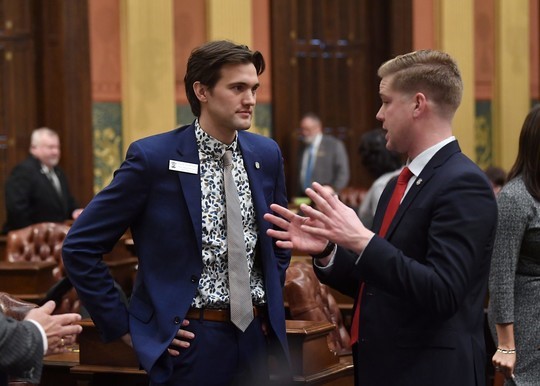
In a critical hearing, my Oversight Subcommittee examined the Michigan Department of Health and Human Services (MDHHS)’s abrupt cancellation of child welfare services, which a December 2025 Court of Claims ruling deemed an “immediate child welfare emergency.” The decision left 426 children in limbo without a transition plan, violating MCL 400.117A4h and highlighting a unilateral exercise of bureaucratic power without legislative oversight or stakeholder input. This move disrupted vital services, risking irreparable harm to families and dismantling nearly a decade of investment in care systems. As I expressed to the witnesses, “I’m sorry that you have to go through this,” emphasizing the tragedy for children missing out on stable homes.
The testimony revealed a pattern where cost-cutting narratives trump child welfare outcomes, potentially endangering communities like Kent County. I questioned whether this reflects a broader weaponization of state authority, where agencies prioritize budgets over lives, leading to delays in services and loss of certified staff. This aligns with my America First commitment to safeguarding our nation’s future through strong family structures, rejecting excesses that allow bureaucracy to undermine the common good.
Further, the hearing highlighted the dedication of WMPC staff and partner agencies, who have stepped up amid the chaos, but cannot sustain the system indefinitely. The judge’s ruling on irreparable harm underscores the need for return on investment measured in lives improved, not dollars saved. As a representative grounded in traditional values, I advocate for protecting the vulnerable, pushing for reforms that prevent such disruptions and ensure state actions support, rather than hinder, community resilience.
My goal is to root out these abuses, demanding transparency and accountability from MDHHS. This case exemplifies how unchecked power can turn government against its people, and I will continue fighting for Michigan-first solutions that prioritize child safety and family unity. Together, we can rebuild a system that honors our ideological principles of limited but effective government.
Michigan Department of Corrections: What Gives?
Last week, as Vice Chair of the Michigan House Oversight Subcommittee on the Weaponization of State Government, I led a hearing focused on the Michigan Department of Corrections (MDOC) and its treatment of women in correctional facilities. Testimony revealed a disturbing pattern of neglect, where a $2.2 billion annual budget, equating to about $12,000 per inmate for healthcare, is not translating into adequate care. Witnesses described substandard medical services, long delays in treatment, and a system that seems to prioritize cost containment over human dignity. This is not just mismanagement; it is a form of bureaucratic weaponization that erodes the God-given rights of vulnerable individuals, turning state institutions into tools of indifference rather than rehabilitation.
During the hearing, I pressed for answers on why resources are not reaching those in need, questioning, “The money’s there. What gives?” The response highlighted a disconnect between funding allocation and on-the-ground reality, with inmates facing barriers to basic healthcare despite the substantial budget. This raises serious concerns about accountability within MDOC, where oversight appears insufficient to prevent such failures. As a Hamiltonian committed to strong, effective institutions that serve the common good, I see this as a failure to uphold national standards of justice and efficiency, undermining public trust in government.
The discussion also touched on the broader implications for Michigan families, as many incarcerated women are mothers whose well-being affects community stability. By allowing these conditions to persist, the state risks perpetuating cycles of poverty and recidivism, contrary to values that emphasize family and cultural preservation. My role in this subcommittee is to expose these abuses and push for reforms that restore limited, accountable government, ensuring that taxpayer dollars are used to protect, not harm, our citizens.
Ultimately, this hearing underscores the need for America First policies that prioritize domestic welfare over bureaucratic bloat. I remain dedicated to holding MDOC accountable, advocating for audits and policy changes that align with post-liberal principles of protecting the vulnerable through robust, directed state action. Stay engaged, Michiganders. Your voices are crucial in this fight for justice.
Vote Record Update
Since my first day in office, I have upheld my promise to regularly share to the public every single vote I have made with an explanation for each one. This is something done by only 8 of 110 Representatives in Michigan. Accountability can only be achieved when there is transparency. Here are my recent votes and reasons:
HB 5210 – Natural Resources and Environmental Protection Act Updates
PASSED: 106–1 – Voted: YES
This bill amends section 47331 of the Natural Resources and Environmental Protection Act (1994 PA 451) to allow multiple vessels to be listed under a single commercial fishing license. Previously, licenses were more restrictive, requiring separate documentation for each vessel, which added unnecessary administrative hurdles for fishermen operating in Michigan’s waters.
I voted YES because this commonsense reform cuts through bureaucratic red tape that burdens hardworking Michiganders in the commercial fishing industry. Government should not micromanage small operators with excessive licensing requirements that do little to enhance safety or conservation but instead hinder economic freedom and livelihoods. By streamlining the process, this bill promotes efficiency, supports individual enterprise, and upholds the principle of limited government intervention, allowing fishermen to focus on their trade rather than paperwork. It’s a step toward ensuring Michigan’s natural resources are managed responsibly without overreaching regulations that stifle opportunity, priorities that align with protecting our working families and local economies from unnecessary state interference, fostering a strong, self-reliant America First approach to industry.
HB 4932 – Public Health Code, Continuing Education for Pharmacists
PASSED: 107–0 – Voted: YES
This bill modifies continuing education requirements for pharmacists and pharmacy technicians under section 17731 of the Public Health Code (1978 PA 368), adjusting the mandates to provide more flexibility while maintaining professional standards.
I voted YES because it eases overly prescriptive government mandates on healthcare professionals, trusting them to uphold their expertise without constant state oversight. In a free society, we should empower individuals in their careers rather than burden them with rigid requirements that can lead to unnecessary costs and time away from serving patients. This change fosters a market-driven approach to professional development, ensuring public safety through accountability rather than bureaucracy, and aligns with my commitment to reducing government overreach in everyday Michiganders’ lives, especially for families relying on accessible, efficient healthcare without added layers of state control, reflecting post-liberal values that prioritize the common good over endless regulatory entanglements.
HB 4934 – Public Health Code, Psychologist Relicensure
PASSED: 107–0 – Voted: YES
This bill amends section 18223 of the Public Health Code (1978 PA 368) to allow psychologists to opt for relicensure as an alternative to standard renewal, providing a practical pathway for maintaining licensure.
I voted YES because it introduces flexibility into a system often bogged down by inflexible state rules, respecting the autonomy of licensed professionals to manage their credentials responsibly. Government licensing should protect the public without creating barriers that discourage qualified individuals from continuing their practice. By offering this option, the bill reduces administrative burdens, promotes personal responsibility, and prevents unnecessary interference in private careers, reflecting core values of limited government and individual liberty that benefit Michigan families seeking mental health services in our communities, advancing an emphasis on tradition and community stability over bureaucratic expansion.
HB 5298 – Insurance Code, No-Fault PIP for Passenger Transport
PASSED: 67–40 – Voted: YES
This bill amends section 3114 of the Insurance Code of 1956 (1956 PA 218) to modify personal protection insurance (PIP) benefits under no-fault for passengers in vehicles operated in the business of transporting people, addressing gaps in coverage for ridesharing and similar services. It is tie-barred with HB 5299.
I voted YES because it provides necessary clarity and fairness in insurance coverage without expanding mandatory government interventions or increasing costs for taxpayers. Michigan’s no-fault system has been plagued by inconsistencies that leave individuals vulnerable, and this reform helps protect everyday people using modern transportation options like rideshares while preventing fraudulent claims and bureaucratic abuse. Upholding individual rights means ensuring that market-driven services can operate efficiently, and this bill advances that goal by fixing targeted issues in the law, putting Michigan families first over special interests, safeguarding our working people from overregulation that drives up costs and limits choices, in line with Hamiltonian principles of supporting domestic industry and infrastructure.
HB 5299 – Insurance Code, No-Fault Definitions
PASSED: 67–40 – Voted: YES
This bill amends section 3107c of the Insurance Code of 1956 (1956 PA 218) to revise definitions related to personal protection insurance benefits in no-fault insurance, aiming to align the law with current practices in passenger transportation. It is tie-barred with HB 5298.
I voted YES because it delivers targeted updates to outdated definitions that have caused confusion and inefficiency in Michigan’s auto insurance system, without broadening state control or imposing new mandates. By refining these terms, the bill helps prevent exploitation and ensures fair application of benefits, safeguarding individual freedoms against overreaching regulations. This pragmatic approach supports a functional, market-oriented insurance framework that protects consumers and drivers, aligning with my principles of fiscal responsibility and limited government to benefit hardworking Michiganders who deserve reliable, affordable protection without endless government meddling, promoting an America First focus on practical, family-centered solutions.
HB 5517 – Income Tax Act, Distributor Credit for Returnable Containers
PASSED: 94–12 – Voted: YES
This bill amends the Income Tax Act of 1967 (1967 PA 281) by adding sections 279 and 679 to create a refundable tax credit for distributors handling returnable beverage containers, starting at $0.005 per container and adjusted for inflation.
I voted YES because this measure supports Michigan’s beverage industry and recycling efforts without imposing broad tax hikes, directing incentives toward local distributors who contribute to our economy and environment. While I remain vigilant against unnecessary subsidies, this targeted credit aligns with responsible stewardship of resources, reducing waste and bolstering domestic production in a way that benefits working families. It reflects a Hamiltonian commitment to nurturing key industries for national strength, ensuring Michigan leads in sustainable practices without distorting markets or burdening taxpayers excessively, putting America First by investing in our own economic resilience.
HB 4593 – Public Health Code, Dental Specialist Representation
PASSED: 105–1 – Voted: YES
This bill amends section 16608 of the Public Health Code (1978 PA 368) to prohibit dentists from falsely representing themselves as dental specialists, promoting honesty in professional advertising. It is tie-barred with HB 4594.
I voted YES because it enforces basic standards of truthfulness in healthcare without expanding bureaucratic oversight, protecting consumers from misleading claims that could harm public trust. Individual rights include the freedom to make informed choices, and this measure ensures transparency in the marketplace, preventing fraud while allowing professionals to operate freely. By targeting specific abuses, it upholds limited government principles, benefiting Michigan patients and families who deserve clear, reliable information in their healthcare decisions, prioritizing personal responsibility and consumer protection over heavy-handed regulation, in keeping with values of tradition and integrity.
HB 4594 – Public Health Code, Prohibition on Dental Specialist Title
PASSED: 105–1 – Voted: YES
This bill amends section 16605 of the Public Health Code (1978 PA 368) to prohibit the unauthorized use of the title “dental specialist” in certain contexts, ensuring accurate representation in dentistry. It is tie-barred with HB 4593.
I voted YES because it safeguards patient rights through straightforward enforcement of honest communication, without adding layers of unnecessary regulation. Government should intervene minimally to prevent deception, fostering a fair market where professionals are held accountable for their claims. This reform aligns with my commitment to transparency and individual liberty, helping Michiganders avoid confusion and make better-informed choices in dental care, values that strengthen our families and communities without growing the state’s footprint, embodying a post-liberal focus on the common good.
HB 5102 – Public Health Code, Elimination of Dentistry Task Force
PASSED: 106–0 – Voted: YES
This bill amends section 16620 of the Public Health Code (1978 PA 368) to eliminate the dentistry task force and repeals related sections, removing a redundant government entity.
I voted YES because it streamlines state operations by cutting unnecessary bureaucratic structures that waste taxpayer dollars without providing meaningful value. Limited government means regularly reviewing and eliminating obsolete programs, and this bill does just that, reducing overhead while maintaining essential oversight in healthcare. By pruning deadwood from the system, we free up resources for more pressing needs, upholding fiscal responsibility and efficiency for Michigan residents, particularly in our district where families expect government to be lean and focused on real priorities, aligning with America First principles of practical governance.
HB 4909 – Occupational Code, Cosmetology School Record Retention
PASSED: 105–1 – Voted: YES
This bill amends section 1205a of the Occupational Code (1980 PA 299) to revise record retention requirements for cosmetology schools, easing administrative burdens.
I voted YES because it reduces excessive regulatory demands on educational institutions, promoting a freer environment for career training and entrepreneurship. Government mandates should not hinder opportunity with outdated paperwork rules that stifle small businesses and schools. This change supports individual initiative and economic growth, ensuring Michigan’s workforce development remains dynamic and unencumbered by needless bureaucracy, helping our young people and families build brighter futures through hard work and minimal state interference, reflecting Hamiltonian support for domestic skill-building.
HB 4346 – Lawful Internet Gaming Act Updates
PASSED: 88–18 – Voted: YES
This bill amends section 15 of the Lawful Internet Gaming Act (2019 PA 152) to remove the cap on revenue allocation to the Michigan Agriculture Equine Industry Development Fund from internet gaming proceeds. It is tie-barred with HB 4347.
I voted YES because it directs funds responsibly to support Michigan’s agricultural and equine sectors without raising taxes or expanding government spending. By lifting artificial limits, this bill allows market-generated revenues to benefit rural communities and preserve our state’s heritage industries, fostering economic stability. It’s a Michigan-first approach that avoids overreach, ensuring taxpayer dollars are used efficiently to bolster key areas like farming and horse racing that contribute to our local economies, reflecting our district’s appreciation for traditional industries and practical, no-nonsense funding solutions that prioritize national self-sufficiency.
HB 4347 – Horse Racing Law of 1995 Amendments
PASSED: 86–20 – Voted: YES
This bill amends sections 2 and 20 of the Horse Racing Law of 1995 (1995 PA 279) to update definitions and fund allocations related to the Michigan Agriculture Equine Industry Development Fund. It is tie-barred with HB 4346.
I voted YES because it modernizes outdated provisions to better support Michigan’s equine industry, providing sustainable funding without imposing new burdens on taxpayers. Government should facilitate, not obstruct, traditional sectors that drive jobs and community vitality, and this reform does so by aligning laws with current realities. By prioritizing fiscal prudence and limited intervention, the bill helps preserve Michigan’s agricultural legacy, benefiting families and businesses across the state, especially in areas where rural heritage and economic self-sufficiency remain central to our identity, embodying respect for cultural traditions.




© 2009 - 2026 Michigan House Republicans. All Rights Reserved.
This site is protected by reCAPTCHA and the Google Privacy Policy and Terms of Service apply.